Execution strategy · Draft · October 2026
Execution strategy
How Neuroscientific Labs would staff, fund and run its open neural interface roadmap over the first three years. A companion to the white paper.
An ideal budget
Doing this well would take about $27 million over three years, released in three tranches tied to the roadmap gates in the white paper. These are planning estimates in 2026 US dollars, not quotes.
| Category | Year 1 | Year 2 | Year 3 | Total |
|---|---|---|---|---|
| Team: 11, then 17, then 21 people, about $240,000 each, fully loaded | $2.6M | $4.1M | $5.0M | $11.7M |
| Community education: 1, then 2 educators, with demo kits and travel | $0.2M | $0.4M | $0.4M | $1.0M |
| Hardware R&D: prototypes, test and reference systems, certification | $0.6M | $0.8M | $0.6M | $2.0M |
| OPM-MEG program: sensors and magnetic field control | $0 | $0.3M | $1.5M | $1.8M |
| Device access fund: inventory for at-cost sales, and free units for labs and students | $0.2M | $0.5M | $0.8M | $1.5M |
| Open data platform: storage, hosting and security | $0.1M | $0.3M | $0.5M | $0.9M |
| Model training compute | $0.1M | $0.5M | $1.0M | $1.6M |
| Research partnerships: validation studies and public device benchmarks | $0.2M | $0.5M | $0.8M | $1.5M |
| Privacy, legal and ethics | $0.2M | $0.3M | $0.3M | $0.8M |
| Space and operations: lab, office, insurance, accounting, travel | $0.4M | $0.6M | $0.7M | $1.7M |
| Contingency, 10% | $0.5M | $0.8M | $1.2M | $2.5M |
| Total | $5.1M | $9.1M | $12.8M | $27.0M |
What each year delivers
- Year 1, $5.1M: open, research-grade wearable EEG, with its hardware, firmware and software released. The first free apps, data donation and public device benchmarks go live, and the first community educator starts demos and workshops. Gate: it matches lab EEG on standard tests, at a fraction of the cost.
- Year 2, $9.1M: smaller, concealable EEG; the open data platform; the first open foundation neural model, trained and distilled; devices in labs and classrooms through the access fund, and a second community educator. Gate: worn all day, with data that stays research-grade.
- Year 3, $12.8M: a wearable OPM-MEG prototype on an open, affordable design path, larger open models, and device access at scale.
Revenue from at-cost device sales and privacy subscriptions is not counted here; as it grows, it covers more of the running costs. A gift can fund the whole plan, a single year, or one line, such as the device access fund or the open data platform.
The team
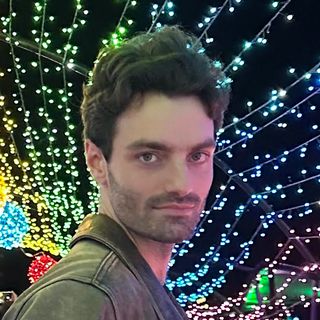
Founder and head of operations
Kristian Droste
Trained in cognitive neuroscience and intracranial EEG as a team member in the Mutual Understanding Lab at Dartmouth and data analyst on the Human Intracranial Electrophysiology study at Dartmouth-Hitchcock Medical Center. As founder of the venture-backed neurotech startup IntoMind, Kris developed a nonsurgical BCI platform that includes compact, wearable EEG devices and open-source software.
In his own words
My conception of the foundation evolved and expanded out of the technological innovation I achieved at IntoMind as I witnessed how my friend and former college roommate was building his own open astronomy foundation, Cosmic Frontier Labs. He helped me see how innovative industrial design coupled with benevolent vision can fundamentally eliminate barriers to scientific progress, especially where those barriers present as data bottlenecks enforced by cost-prohibitive or proprietized instrumentation. Open science is positive-sum, and Neuroscientific Labs is here to hold the door.
Twenty-three people by year 3, hired in the order the roadmap needs them. Hardware and EEG science come first, then miniaturization, data and community, then OPM-MEG and manufacturing. Community educators take the devices to schools, labs and universities from year 1.
| Role | Joins | Qualifications |
|---|---|---|
| Founder and head of operations | Year 1 | Runs operations, finance and hiring, and works across the team wherever needed |
| Head of fundraising | Year 1 | Proven record raising major gifts and foundation grants; relationships in science and technology philanthropy; leads funding partnerships |
| Chief scientist | Year 1 | PhD in neuroscience or biomedical engineering; 10+ years of EEG research; experience running human studies and ethics review |
| Head of hardware | Year 1 | MS or PhD in electrical engineering; has shipped wearable or biosignal products; low-noise analog design; FCC and CE certification |
| Head of digital | Year 1 | Has led software, data or machine learning teams; shipped apps and data platforms; open source and privacy by design |
| Hardware engineer, mixed-signal | Year 1 | Circuit-board layout, low-noise amplifiers, design for manufacturing |
| Firmware engineer | Year 1 | Embedded C, C++ or Rust; Bluetooth Low Energy; real-time signal processing on microcontrollers |
| Industrial and mechanical designer | Year 1 | Wearable products: comfort, fit, electrode mechanics, from prototype to injection molding |
| Signal processing scientist | Year 1 | EEG artifact removal and quality metrics; open EEG tools and data formats (MNE-Python, BIDS) |
| App and platform engineer | Year 1 | Mobile apps and cloud backends; live Bluetooth streaming; privacy by design |
| Machine learning research engineer | Year 1 | Self-supervised learning on time series, transformers, PyTorch, model distillation |
| Community educator | Year 1 | Gives demos and workshops at schools, labs and universities; experience teaching science or electronics hands-on |
| Hardware engineer, miniaturization | Year 2 | Flexible circuits, low-power design, small wearable form factors |
| Electrode and materials scientist | Year 2 | PhD in materials science or bioengineering; dry and soft electrodes; how electrodes contact skin |
| Machine learning research engineer | Year 2 | Large-scale training, evaluation, models that run on the device |
| Data platform and privacy engineer | Year 2 | Data pipelines, de-identification, security, consent records, the open data portal |
| Mobile app engineer | Year 2 | Consumer and research apps, including games; accessibility |
| Open-source community lead | Year 2 | Contributors, documentation, hackathons, the public device benchmarks |
| Community educator | Year 2 | Gives demos and workshops at schools, labs and universities; experience teaching science or electronics hands-on |
| OPM-MEG physicist | Year 3 | PhD in atomic physics or quantum sensing; optically pumped magnetometers |
| OPM-MEG systems engineer | Year 3 | Magnetic-field cancellation coils and shielding, control systems, sensor integration |
| Research scientist, validation | Year 3 | Human studies; benchmarks against lab-grade EEG and MEG; open publication |
| Manufacturing and supply chain lead | Year 3 | Contract manufacturing, bringing costs down, at-cost pricing, logistics |
Every PhD listed can be replaced by equivalent experience. Privacy counsel and ethics review are contracted, and advisors in neuroethics, privacy law and EEG and MEG science serve outside the headcount.
How the team works
Each department has a head who is responsible for it, but day to day, everyone works with everyone.
The founder runs operations and works across everything, supported by contracted privacy counsel, ethics review and accounting.
Contribute to the vision.
Got nerve? I’m in